


في هذه الصفحة
Eating out lactose intolerant doesn't mean you need a vegan restaurant. Lactose intolerance is a question of dose rather than a ban on dairy, so the useful thing to know is how much lactose a dish carries and how much you can handle.
Lactose intolerance is a question of dose
We know this one first-hand. Karim and Aurélie, the founders of eatova (formerly AlignEat), both manage lactose intolerance, so what's in the sauce is an everyday question for them.
Lactose intolerance means your body makes too little lactase, the enzyme that digests milk sugar. It isn't an all-or-nothing rule. Most people with lactose intolerance can have some lactose without symptoms, and the amount that suits you is your own to learn.
That's why a blanket "no dairy" can take away more than it needs to. A little butter on the vegetables and a bowl of ice cream are very different doses, even though both count as dairy. A mild lactose intolerance isn't the same as a peanut allergy either, and the way you order can reflect that.
Why vegan listings are the wrong filter
Vegan listings are a great resource for people who eat vegan, and they solve a different problem. Vegan food has no animal products at all. A dairy-free dish leaves out one group of ingredients and can still hold meat, fish, eggs or honey. If you've ever wondered how those labels overlap, our guide to vegetarian and vegan definitions sets them side by side.
Neither filter is about dose. Yogurt and hard cheeses such as cheddar or Swiss are lower in lactose than other milk products, so a vegan filter hides dishes you might enjoy. Start from what you can eat, and a much longer menu opens up.
How much lactose each kind of dairy tends to carry
Lactose is in all milk and milk products, in very different amounts. This is the rough order, high to low, and where you'll meet each one on a menu.
Kind of dairy | Lactose | Where you'll meet it | At the table |
|---|---|---|---|
Milk, cream and ice cream | Highest | Creamy sauces and soups, milky coffee, desserts | Ask for the sauce on the side, or keep the portion small |
Soft fresh cheese | High, below milk | Fillings, salads and desserts | Ask how much goes into the dish |
Yogurt | Lower, and often tolerated better than its lactose suggests | Dips, marinades and dressings | Try a small amount first |
Butter | Low | Finishing vegetables, rice and grilled meat | A small amount may suit you |
Aged hard cheese | Low | Grated over pasta, shaved over salads | A good choice to test first |
Ghee | Lower than butter | Rice dishes and curries | The lowest here, and still a milk product |
Everyone's limit is different, so treat this as an order rather than a promise. Milk products may also be added to baked goods, salad dressings and processed meats, so a dish that doesn't look creamy can still count. Our guide to hidden dairy in Middle Eastern food shows how that plays out dish by dish.
Intolerance, allergy and ordering to your own limit
Everything above is for lactose intolerance only. A milk allergy is an immune reaction to milk proteins, so thinking in doses doesn't apply. Lactose-free milk still contains milk protein, and butter and ghee are both on FARE's list of ingredients to avoid with a milk allergy. If you have a milk allergy, treat every row of that table as a no, and speak to your doctor about what's right for you.
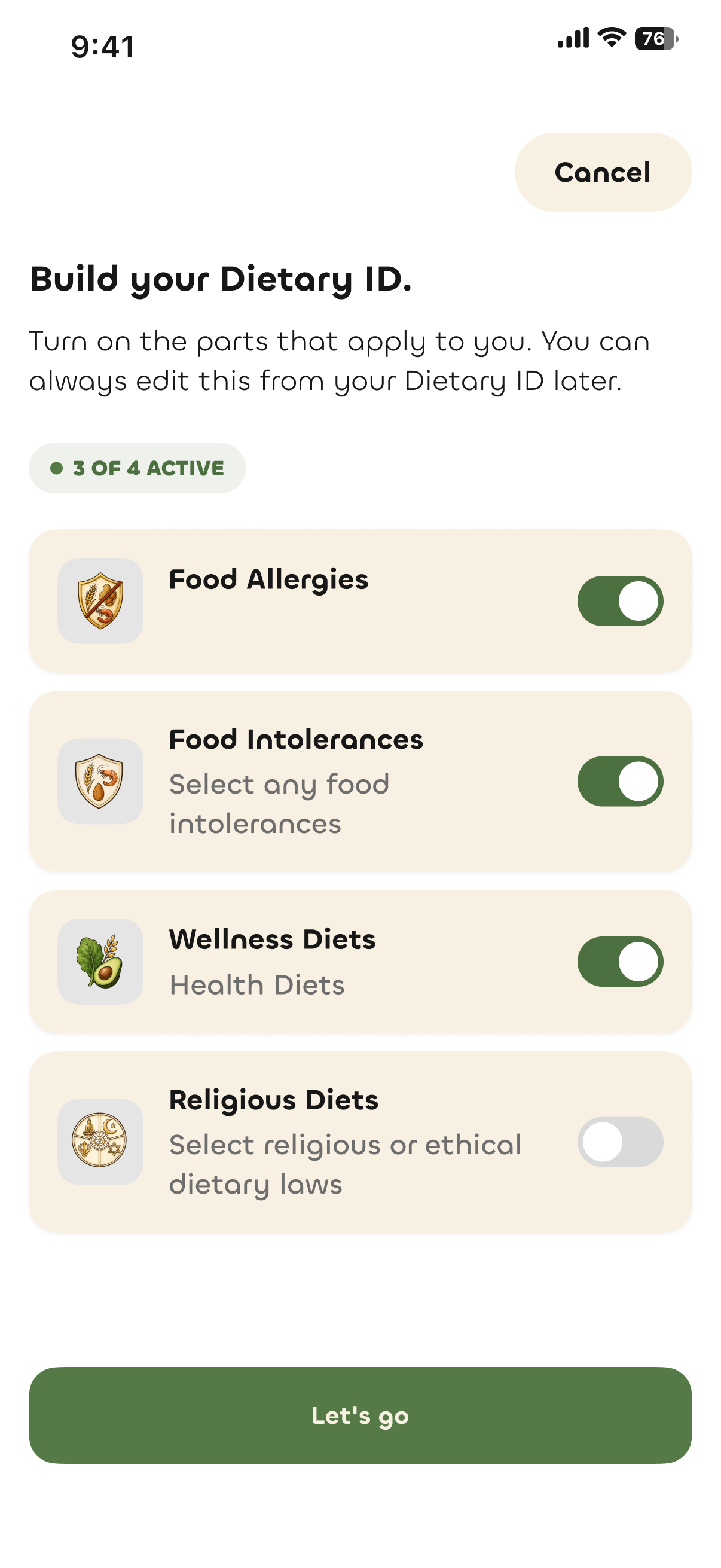
If you're lactose intolerant, set eatova to match how you actually eat. Each entry in your Dietary ID can run from general preference to strict avoidance, with dairy and lactose-free among the options, so a mild intolerance doesn't have to read like a strict rule.
When a menu can't settle a dish, you get an Ask with a specific question for the kitchen. eatova can't guarantee a meal is safe, so check anything that matters before you order. See how eatova reads a menu, then try it on your next dinner out.
الأسئلة الشائعة
What can I eat out if I am lactose intolerant?
Plenty: grilled dishes, aged cheeses and small amounts of butter or yogurt often work, depending on your own limit.
Is a vegan restaurant the only safe option for dairy-free?
No. A kitchen can often leave dairy out, but with a milk allergy, check cross-contact with staff first.