


في هذه الصفحة
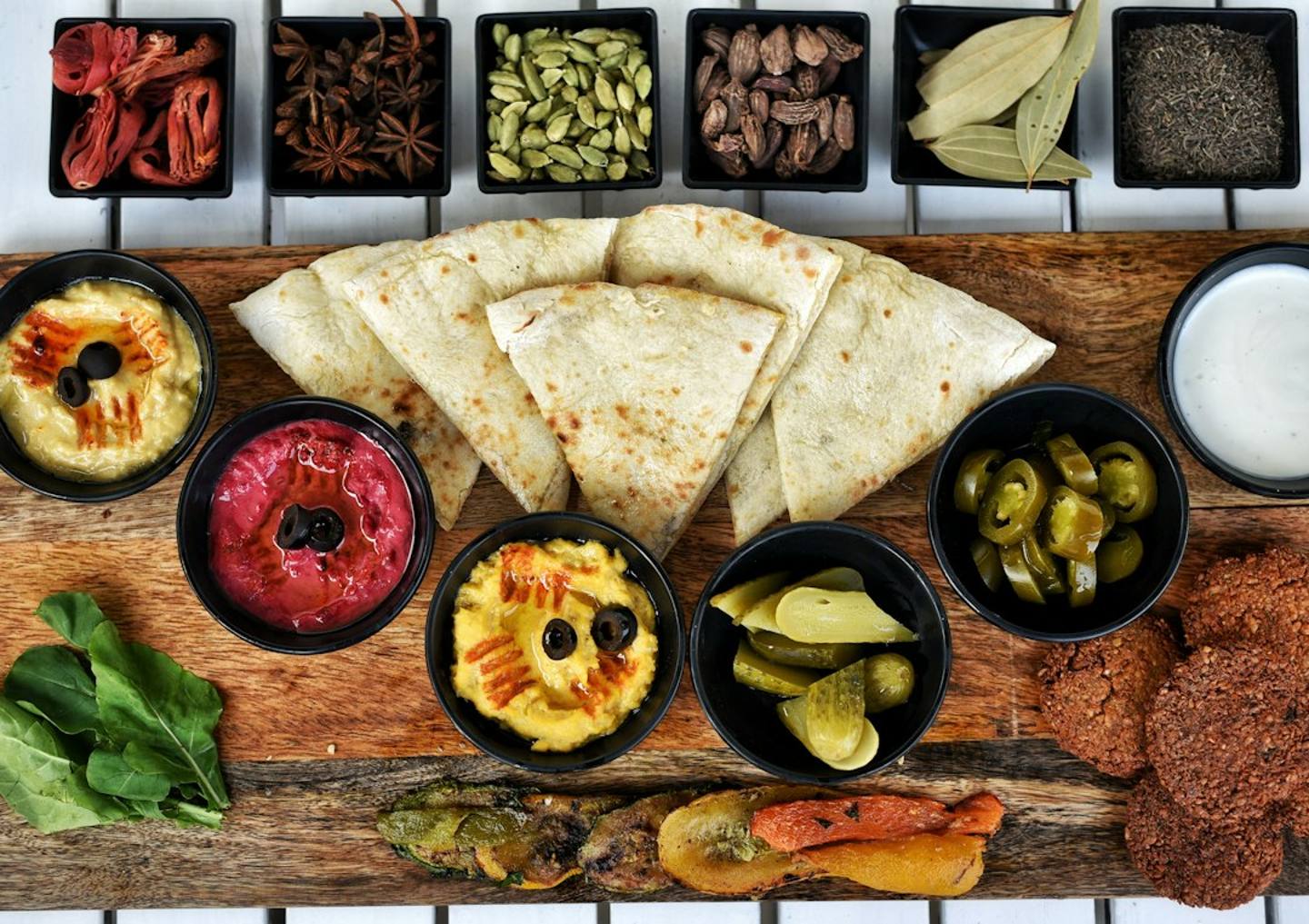
You can eat very well at a low-carb Lebanese restaurant table: build the meal from the grill and the oil and yogurt mezze, hold the bread, rice and bulgur, and treat chickpea dishes and anything sweet-glazed as small sides. Below, each dish sits next to its approximate carb count, so you can order the keto Lebanese food you actually want and skip the plates that only look light.
Why Lebanese food is a low-carb cuisine with four traps
Lebanese cooking starts from ingredients a low-carb eater already likes: meat and fish over charcoal, olive oil poured generously, thick yogurt, lemon, garlic and handfuls of fresh herbs. Most of the table is fair game. The carbs travel in four carriers, and once you can spot them the menu gets much simpler.
Bread is the obvious one: the pita basket, the toasted chips in fattoush, the flatbread around a wrap. Rice is the second, tucked inside stuffed vine leaves. Bulgur is the third, the base of tabbouleh and the shell of kibbeh. Chickpeas are the fourth, in hummus and falafel, and they're the carrier people underestimate most.
The catch is that carriers rarely show up on the menu in plain words. A dish named for its herbs can be mostly grain. Closing that gap between the name and the plate is the job eatova (formerly AlignEat) does. When you scan a menu, the app reads each dish against a database of 776K+ dishes and 445K+ ingredients and gives it one of three verdicts: compatible, ask the kitchen, or avoid. The two tables below show where the familiar Lebanese dishes tend to land for a low-carb profile, and why.
The grill and the mezze: the dishes to build the meal on
Build the meal here. Sauce and dip figures are approximate net carbs per 2 tablespoons, the same numbers as our ranking of hidden carbs in Middle Eastern sauces; the plain proteins follow USDA FoodData Central.
Dish | What it is | Approximate net carbs | What to ask for |
|---|---|---|---|
Shish taouk | Chicken skewers marinated in garlic, lemon and yogurt | Close to 0 g for the chicken; the marinade adds a little | Toum on the side, no bread |
Kafta | Spiced minced lamb or beef, grilled on skewers | Low; the meat is close to 0 g, the onion and parsley in the mix add a little | Salad in place of rice or fries |
Lamb chops | Chops seasoned simply and grilled | Close to 0 g | Grilled vegetables on the side |
Grilled fish (samak meshwi) | Fish grilled with herbs and lemon | Close to 0 g | Lemon and olive oil rather than a tahini sauce |
Labneh | Strained yogurt finished with olive oil | 3 to 5 g | Cucumber slices in place of pita |
Moutabal | Smoky eggplant blended with tahini | 6 to 9 g | A few spoonfuls, shared |
Shanklish | Aged cheese rolled in herbs, served with tomato and onion | Low | Extra olive oil, no bread |
Toum | Garlic whipped with oil and lemon | 1 to 2 g | Ask for it with everything on this list |
The meat figures hold for the meat as it comes off the grill. Marinades, glazes and whatever sits under the skewer change the count, which is why the side matters as much as the main. We keep ourselves honest on this too: across 300 menus in our own testing, our dish verdicts were accurate 79% to 93% of the time, so when a marinade can't be confirmed the app says ask the kitchen rather than calling it safe.
The dishes that look safe and are not
These are the plates that sound light and arrive carrying grain, chickpeas or sugar. Each one has a swap that most kitchens will make.
Dish | Where the carbs come from | Approximate net carbs | The swap |
|---|---|---|---|
Hummus | Chickpeas | 8 to 10 g per 2 tablespoons | A spoonful as a side, never the base of the meal |
Fattoush | Toasted or fried pita chips | Depends on the chips | Ask for it without the chips |
Tabbouleh | Bulgur wheat | Higher than its green colour suggests | Extra parsley and little bulgur, or a plain green salad |
Warak enab | Rice filling | High | A meat-only version, where the kitchen makes one |
Kibbeh | Bulgur shell | High | Kafta from the grill instead |
Falafel | Fried chickpeas, served with tarator (tahini thickened with bread) | Tarator alone is 10 to 14 g per 2 tablespoons | Skip it, or one piece with toum |
Anything pomegranate glazed | Pomegranate molasses | 18 to 22 g per 2 tablespoons of glaze | The same dish plain, with lemon |
Hummus is the one most people misjudge. It's a fine side and a poor foundation: two spoonfuls stay modest, while a plate scooped up with bread goes well past that. Pomegranate is the other surprise, because a glaze reads as a garnish and carries more than any dip on the table.
The same caution runs through the app. If we can't confidently verify a dish, we'll tell you. We never guess. A fattoush whose dressing can't be confirmed comes back as ask the kitchen, not compatible. If dairy matters to you as well, our guide to hidden dairy in Middle Eastern food covers the yogurt and butter questions.
How to order it: three courses, one sentence each
For the mezze round, take labneh, moutabal, shanklish and toum, ask for cucumber in place of the bread basket, and keep hummus to a spoonful. For the main, pick one thing from the grill (shish taouk, kafta, lamb chops or fish) with salad instead of rice. For the sweet, pass on the syrup-soaked pastries and finish with mint tea.
Lebanese kitchens are generous with swaps. Most will hold the bread basket, leave the chips out of the fattoush and, where they make it, serve warak enab stuffed with meat only. If turning down the bread feels awkward, our note on refusing food without offending has the phrasing. Some dishes can't be rebuilt, though: kibbeh is its bulgur shell, and mujaddara is lentils and rice all the way through.
We're based in Dubai, where a Lebanese menu is an everyday thing. Set your low-carb profile once in eatova, then scan whatever menu is in front of you: printed, a handwritten special, a QR code, a PDF or a link. Every dish comes back with its verdict, so the evening goes on the food rather than the arithmetic. See how the scan works, or compare the plans before your next dinner out.
الأسئلة الشائعة
Is hummus keto?
In small amounts. Hummus is made from chickpeas and carries about 8 to 10 g of net carbs per two tablespoons, so a couple of spoonfuls fit most keto days and a full plate scooped up with bread does not. Eat it with cucumber and let labneh or toum do the heavy lifting.
How many carbs are in a shawarma plate without bread?
Fewer than you might fear, as long as the meat comes plain. Grilled meat is close to 0 g before marinade, toum adds 1 to 2 g and tarator adds 10 to 14 g per two tablespoons. Skip the rice and fries, ask for salad and pickles, and check whether the marinade is sweetened.
Is tabbouleh low-carb?
Not as it's usually made. Traditional tabbouleh is built on bulgur wheat, so a restaurant portion carries more carbs than it looks. Ask whether the kitchen can make it with extra parsley and little bulgur; if not, fattoush without the chips or a plain cucumber and tomato salad is the safer order.